For anyone who wants to know the weight of the fuselage MINUS the wheel assembly, all of it bolted and the wood insers in place, I ma speaking of plans up to drawing three, I weighed it on my calibrated scales as 69 lbs. This should be a good place to work from, I have not included the tail wheel, seats, floor boarding or anything except what you see on drawing three of the plans. (And built in strict accordance to the plans.)
-Roy
Showing posts with label weight. Show all posts
Showing posts with label weight. Show all posts
Wednesday, January 11, 2012


Tuesday, November 29, 2011
Weight Notes, Thanks to Johnnie
Johnnie:
I did the following and have been mining the combined Affordaplane sights and seeing what CAN be done. Check this out and some that know might respond.
Affordaplane Materials Cost & Weights;
Per Aircraft Spruce & Specialty pdf catalog and internet search.
Bolts:
Actually priced the AN3 & 4 bolts. Then multiplied that amount by 2.5 (to simulate bolt, washer and nut combo), that came to $257.50. By adding each bolts lengths, a total rod length was determined, so a (kind of) bolt weight could be derived. That total was doubled to allow for a (kind of combo weight) bolt length plus the bolt head and nut. This came out to nearly 8 pounds. This doesn't include cable, cable tangs, hinges, rivets, or gussets and things.
Next was the tubing: size & weight per ft TTL WT TTL COST
46 ft of Sq tube. 2"X2".125 1.120 51.52 lbs 211.60
48 ft of rnd tube ½"X.058 0.0962 4.62 lbs 204.70
10 ft 1"X.035 0.1275 1.28 19.90
3 ft 5/16"X.049 0.0423 0.1269 6.75
132 ft 1"X.058 0.2060 27.19 382.80
64 ft 1 1/8"X.058 0.2321 14.85 185.60
24 ft 1 ½"X.058 0.3137 7.53 126.00
24 ft 2"X.058 0.4225 10.14 141.60
6 ft 1 3/8"X.058 0.2865 1.72 29.82
6 ft 1 7/8"X.058 0.3954 2.37 39.00
4 ft Al Rod 1" 1.2 4.8 46.12
14 ft 7/8"X.058 0.1777 2.5 35.00
3 ft Al Angle 2"X2" 0.125 1.5 4.50
------------------------------------------------+-------------+------------
130.15 lbs 1433.39
Above hardware 8.0 257.50
+-------------+------------
138.15 lbs 1690.89
We haven't gotten to the motor or re-drive / gearbox … so let's take a glimmer. Engine Choices (excerpt from plans) The Affordaplane was originally designed with a Rotax 277. With the weight of the test pilot being 240 pounds, and carrying a ballistic, it was not enough power. I recommend an engine with at least 35 horsepower, and weighing not over 80 pounds. You can choose from a rotax 377, 447, 1/2 vw (watch the weight and hp on these) a 2SI 35 hp, or a Kawasaki 440. The plans show an engine mount for the Rotax 447.
Rotax 447 engine specifications.
DESCRIPTION: Two-cycle, two-cylinder engine, oil in fuel lubrication
BORE: 67.5 mm (2.657 in.)
STROKE: 61 mm (2.40 in.)
DISPLACEMENT: 436.5 cc (26.635 cu. in.)
COMPRESSION RATIO: Theoretical 9.6, effective 6.3
POWER OUTPUT: 29.5 kw (40 HP) at 6000 rpm
TORQUE MAX.: 44.0 NM (32.5 ft. lbs.) at 6000 rpm
MAXIMUM RPM: 7000 RPM
DIRECTION OF ROTATION: Counter-clockwise, viewed towards PTO
CYLINDER: 2 light alloy cylinders w/ cast iron sleeves
PISTON: Aluminum cast piston with 2 rings
PISTON/CYLINDER CLEARANCE: 0.08- 0.09mm (.00315-.00354 in.)
IGNITION SYSTEM: Breakerless Ducati capacitor discharge ignition with magneto
generator.
GENERATOR OUTPUT: AC 12V 110W + 30W
RECTIFIER-REGULATOR: (optional) a.) #9103 requires minimum load 12 W (1 amp.)
b.) #9251 requires no minimum load
IGNITION TIMING: 2.09 mm = .086" BTDC
CONTACT POINT GAP: 0.4 mm = .015"
SPARK PLUG: 12mm NGK B8ES
ELECTRODE GAP: .015" GAP
CARBURETOR: 1 X BING 36mm, with hand lever choke
FUEL PUMP: pneumatic fuel pump #6903
FUEL: Regular gasoline, octane not below 90 unleaded
LUBRICATION OF ENGINE: Super two stroke oil (AV-2)
MIXING RATIO: 50 TO 1 (2%)
STARTER: Rewind starter
optional: electric mag side without recoil option
REDUCTION GEARBOX "B": Reduction gear-box with Torsional shock absorber
RATIOS: 2.00 to 1, 2.238 to 1, 2.58 to 1
DIRECTION OF PROP ROTATION: Clockwise, viewed toward prop flange
COOLING: Air cooled by axial fan
WEIGHTS: Engine without carburetor, intake silencer, fuel pump, Exhaust System......................
Carb With Rubber Socket.......... 2.0 lbs.......( 0.9 kg.)
Exhaust System (approx.)........ 10.8 lbs.......( 4.9 kg.)
Electric Start Kit (Optional).... 7.70 lbs......( 3.5 kg.)
Reduction Box "B" - Dry...........9.9 lbs.......( 4.5 kg.)
You still need gusset material, wheels for your landing gear, the plastic ends to mount your wing ribs to the spars (or foam to make the ribs). You'll need various wire rope cableing for your guys, rivets, seat material… etc, you'll just have to get the plans and READ them. One fellow told me a completed wing weighed 39 lbs (but he had a aluminum fuel tank in each.
You can lighten it up in several areas by leaving out the false spars, ribs, and nose ribs. No, it won't be quite as smooth looking but it would be functional. I too, will be doing further research to find ways to lighten her up and would appreciate any suggestions be emailed to me.
This is just something, I spent today putting together, as "FOR YOUR INFO" as a set of condensed ball park figuires. THANKS John
I did the following and have been mining the combined Affordaplane sights and seeing what CAN be done. Check this out and some that know might respond.
Affordaplane Materials Cost & Weights;
Per Aircraft Spruce & Specialty pdf catalog and internet search.
Bolts:
Actually priced the AN3 & 4 bolts. Then multiplied that amount by 2.5 (to simulate bolt, washer and nut combo), that came to $257.50. By adding each bolts lengths, a total rod length was determined, so a (kind of) bolt weight could be derived. That total was doubled to allow for a (kind of combo weight) bolt length plus the bolt head and nut. This came out to nearly 8 pounds. This doesn't include cable, cable tangs, hinges, rivets, or gussets and things.
Next was the tubing: size & weight per ft TTL WT TTL COST
46 ft of Sq tube. 2"X2".125 1.120 51.52 lbs 211.60
48 ft of rnd tube ½"X.058 0.0962 4.62 lbs 204.70
10 ft 1"X.035 0.1275 1.28 19.90
3 ft 5/16"X.049 0.0423 0.1269 6.75
132 ft 1"X.058 0.2060 27.19 382.80
64 ft 1 1/8"X.058 0.2321 14.85 185.60
24 ft 1 ½"X.058 0.3137 7.53 126.00
24 ft 2"X.058 0.4225 10.14 141.60
6 ft 1 3/8"X.058 0.2865 1.72 29.82
6 ft 1 7/8"X.058 0.3954 2.37 39.00
4 ft Al Rod 1" 1.2 4.8 46.12
14 ft 7/8"X.058 0.1777 2.5 35.00
3 ft Al Angle 2"X2" 0.125 1.5 4.50
------------------------------------------------+-------------+------------
130.15 lbs 1433.39
Above hardware 8.0 257.50
+-------------+------------
138.15 lbs 1690.89
We haven't gotten to the motor or re-drive / gearbox … so let's take a glimmer. Engine Choices (excerpt from plans) The Affordaplane was originally designed with a Rotax 277. With the weight of the test pilot being 240 pounds, and carrying a ballistic, it was not enough power. I recommend an engine with at least 35 horsepower, and weighing not over 80 pounds. You can choose from a rotax 377, 447, 1/2 vw (watch the weight and hp on these) a 2SI 35 hp, or a Kawasaki 440. The plans show an engine mount for the Rotax 447.
Rotax 447 engine specifications.
DESCRIPTION: Two-cycle, two-cylinder engine, oil in fuel lubrication
BORE: 67.5 mm (2.657 in.)
STROKE: 61 mm (2.40 in.)
DISPLACEMENT: 436.5 cc (26.635 cu. in.)
COMPRESSION RATIO: Theoretical 9.6, effective 6.3
POWER OUTPUT: 29.5 kw (40 HP) at 6000 rpm
TORQUE MAX.: 44.0 NM (32.5 ft. lbs.) at 6000 rpm
MAXIMUM RPM: 7000 RPM
DIRECTION OF ROTATION: Counter-clockwise, viewed towards PTO
CYLINDER: 2 light alloy cylinders w/ cast iron sleeves
PISTON: Aluminum cast piston with 2 rings
PISTON/CYLINDER CLEARANCE: 0.08- 0.09mm (.00315-.00354 in.)
IGNITION SYSTEM: Breakerless Ducati capacitor discharge ignition with magneto
generator.
GENERATOR OUTPUT: AC 12V 110W + 30W
RECTIFIER-REGULATOR: (optional) a.) #9103 requires minimum load 12 W (1 amp.)
b.) #9251 requires no minimum load
IGNITION TIMING: 2.09 mm = .086" BTDC
CONTACT POINT GAP: 0.4 mm = .015"
SPARK PLUG: 12mm NGK B8ES
ELECTRODE GAP: .015" GAP
CARBURETOR: 1 X BING 36mm, with hand lever choke
FUEL PUMP: pneumatic fuel pump #6903
FUEL: Regular gasoline, octane not below 90 unleaded
LUBRICATION OF ENGINE: Super two stroke oil (AV-2)
MIXING RATIO: 50 TO 1 (2%)
STARTER: Rewind starter
optional: electric mag side without recoil option
REDUCTION GEARBOX "B": Reduction gear-box with Torsional shock absorber
RATIOS: 2.00 to 1, 2.238 to 1, 2.58 to 1
DIRECTION OF PROP ROTATION: Clockwise, viewed toward prop flange
COOLING: Air cooled by axial fan
WEIGHTS: Engine without carburetor, intake silencer, fuel pump, Exhaust System......................
Carb With Rubber Socket.......... 2.0 lbs.......( 0.9 kg.)
Exhaust System (approx.)........ 10.8 lbs.......( 4.9 kg.)
Electric Start Kit (Optional).... 7.70 lbs......( 3.5 kg.)
Reduction Box "B" - Dry...........9.9 lbs.......( 4.5 kg.)
You still need gusset material, wheels for your landing gear, the plastic ends to mount your wing ribs to the spars (or foam to make the ribs). You'll need various wire rope cableing for your guys, rivets, seat material… etc, you'll just have to get the plans and READ them. One fellow told me a completed wing weighed 39 lbs (but he had a aluminum fuel tank in each.
You can lighten it up in several areas by leaving out the false spars, ribs, and nose ribs. No, it won't be quite as smooth looking but it would be functional. I too, will be doing further research to find ways to lighten her up and would appreciate any suggestions be emailed to me.
This is just something, I spent today putting together, as "FOR YOUR INFO" as a set of condensed ball park figuires. THANKS John
Tuesday, November 22, 2011
Not part 103? Well we can fix that.
So, the affordaplane really isn't a part 103 legal airplane.
At least as per the plans. However, there is some hope. The idea is good. The concept is solid. So lets make it legal.
Dan L suggested we swap to .75" tubing on the tailplane. We'll need to do the math to determine if it will support the aerodynamic loads. He suggests there's an 8lb savings to be found there.
I recommended the replacement of the tail tubing, windshield post tubing, and lower motor mount tubing with 2"x.0.0625 wall tubing. I think there's 19lbs to be saved using that technique. Math will need to be done to determine if the tail will have sufficient torsional rigidity.
The cross bracing on the tail should be .75diameter and you can go with much thinner wall tubing. There's 1.6lbs to be saved there, if you retain the same wall thickness.
I suggested that by going to V wing support struts, you can eliminate one 1" aluminum bar, and save two pounds. and the front strut, if bolted in properly, could have it's center 1' removed. Saving three pounds total.
The landing gear as designed leaves a lot to be desired. We'll need to discuss the replacemnet options. Gent has a 30lb bent aluminum plate as his. The texas parasol landing gear are lighter, and provide suspension as well.
At least as per the plans. However, there is some hope. The idea is good. The concept is solid. So lets make it legal.
Dan L suggested we swap to .75" tubing on the tailplane. We'll need to do the math to determine if it will support the aerodynamic loads. He suggests there's an 8lb savings to be found there.
I recommended the replacement of the tail tubing, windshield post tubing, and lower motor mount tubing with 2"x.0.0625 wall tubing. I think there's 19lbs to be saved using that technique. Math will need to be done to determine if the tail will have sufficient torsional rigidity.
The cross bracing on the tail should be .75diameter and you can go with much thinner wall tubing. There's 1.6lbs to be saved there, if you retain the same wall thickness.
I suggested that by going to V wing support struts, you can eliminate one 1" aluminum bar, and save two pounds. and the front strut, if bolted in properly, could have it's center 1' removed. Saving three pounds total.
The landing gear as designed leaves a lot to be desired. We'll need to discuss the replacemnet options. Gent has a 30lb bent aluminum plate as his. The texas parasol landing gear are lighter, and provide suspension as well.
Wednesday, November 9, 2011
Affordaplane weights.
The plans state that an affordaplane weighs 254lbs. That's the "rule" weight. Something seems rather fishy about that. Turns out.. it's as fishy as it sounds. Here's a list of completed Affordaplane weights:
Original Prototype: 265lbs
With Rotax 277
Gents A-Plane: 425lbs
His is 084 powered. That alone is a 125lb powerplant.
Mike R's A-Plane: 310lbs
With Rotax 447
Todds A-Plane: 426lbs
With Rotax 503
Todd B A-plane: 324lbs
aplanebuilder A-plane: 320lbs
With efforts to lighten it.
danl239: over 456lbs
Not built to plans.
356lbs without engine.
Please, if you have built one, tell me what yours weighs. Lets get you in as part of the database!
The word is, that with some work, and lots of work, the plane can be built under part 103 weight. That will be discussed in some of the modification posts.
Mailing list refrence: http://groups.yahoo.com/group/Cheapaircraft/messages/390
http://groups.yahoo.com/group/Cheapaircraft/message/4206?threaded=1&l=1
Original Prototype: 265lbs
With Rotax 277
Gents A-Plane: 425lbs
His is 084 powered. That alone is a 125lb powerplant.
Mike R's A-Plane: 310lbs
With Rotax 447
Todds A-Plane: 426lbs
With Rotax 503
Todd B A-plane: 324lbs
aplanebuilder A-plane: 320lbs
With efforts to lighten it.
danl239: over 456lbs
Not built to plans.
356lbs without engine.
Please, if you have built one, tell me what yours weighs. Lets get you in as part of the database!
The word is, that with some work, and lots of work, the plane can be built under part 103 weight. That will be discussed in some of the modification posts.
Mailing list refrence: http://groups.yahoo.com/group/Cheapaircraft/messages/390
http://groups.yahoo.com/group/Cheapaircraft/message/4206?threaded=1&l=1
So what about the Affordaplane?
So if you build an Affordaplane, what can you expect?
Who is building one? Well here's who is building them.
How many have been completed?
Do we have proof of them flying? Yes! Lots! In various configurations.
What will it weigh? This is what an affordaplane weighs.
What is the planes glide ratio, at what weight, and at what speed? Good questions!
What engine should I chose? Here's your options, and what they weigh, and how much power they make.
What defines the VNe?
What is the expected takeoff run?
What are the power on, and power off stall speeds?
Will the plane spin? How easily will it recover from a spin?
What sort of performance should one expect from a given power level?
Who is building one? Well here's who is building them.
How many have been completed?
Do we have proof of them flying? Yes! Lots! In various configurations.
What will it weigh? This is what an affordaplane weighs.
What is the planes glide ratio, at what weight, and at what speed? Good questions!
What engine should I chose? Here's your options, and what they weigh, and how much power they make.
What defines the VNe?
What is the expected takeoff run?
What are the power on, and power off stall speeds?
Will the plane spin? How easily will it recover from a spin?
What sort of performance should one expect from a given power level?
Questions the plans left open to interpretation.
I'll happily add anyone else's questions to this. The answers will be covered in later posts.
The plans never mention the weight of the prototype: What do these things really weigh?
The plans indicate the prototype used a Rotax 277 and that it was underpowered: What defines underpowered?

The plans indicate the Rotax 447 is the recommended motor, it weighs 82lbs. The plans state the motor weight budget is 80lbs: What is the real engine weight budget?

The plans don't have any indication of what the target weights are for components: What should each part weigh?
The plans never mention the weight of the prototype: What do these things really weigh?

The plans indicate the prototype used a Rotax 277 and that it was underpowered: What defines underpowered?
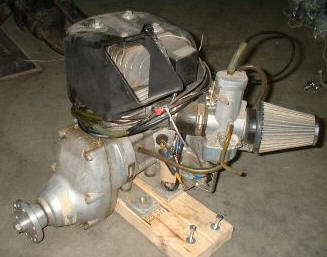
The plans indicate the Rotax 447 is the recommended motor, it weighs 82lbs. The plans state the motor weight budget is 80lbs: What is the real engine weight budget?

The plans don't have any indication of what the target weights are for components: What should each part weigh?
Subscribe to:
Posts (Atom)